

Previous
Previous
The Analog Rebellion: Directing Juanes' "La Carta" on a 1965 Canon Scoopic
Next
Next
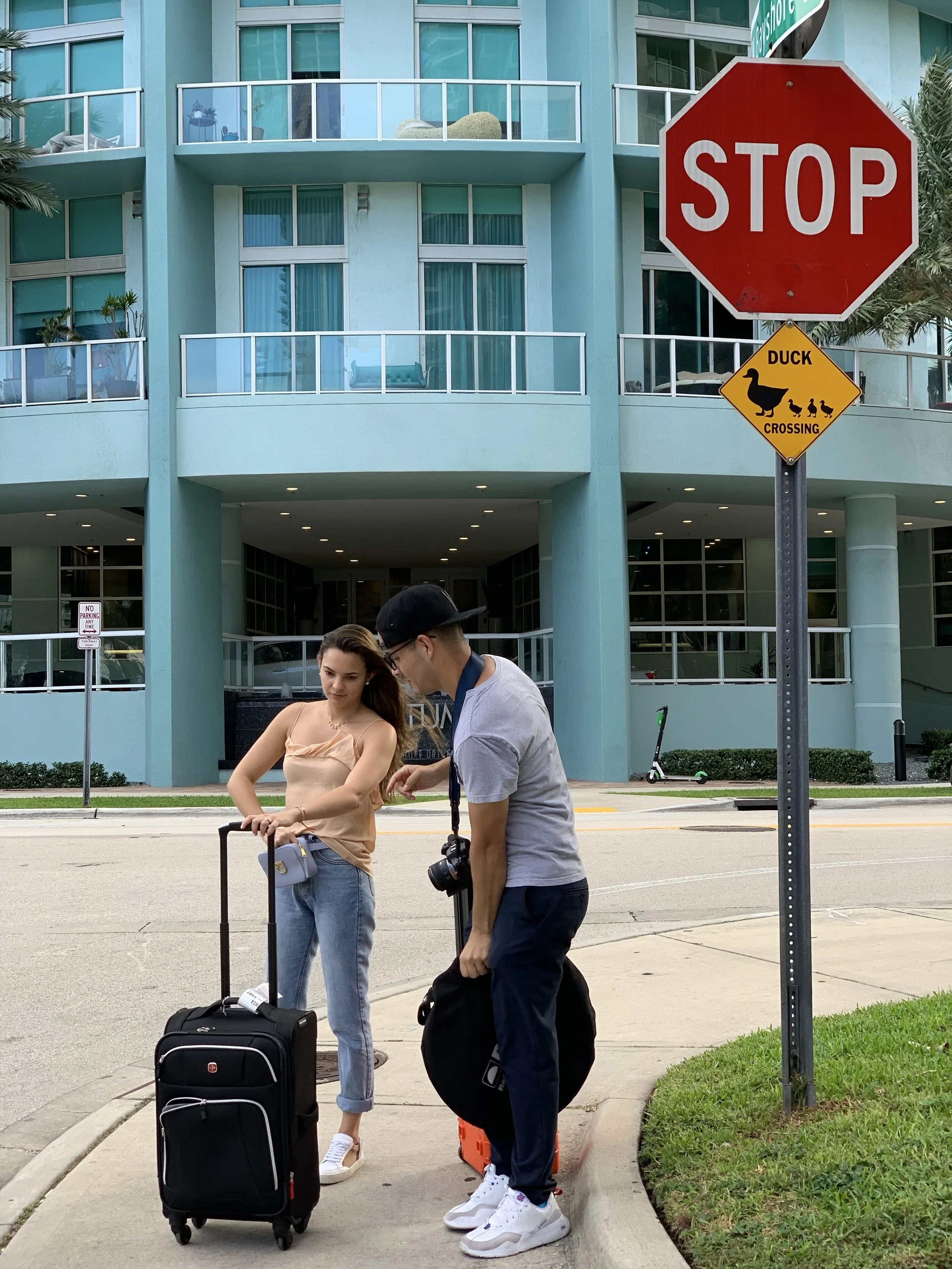
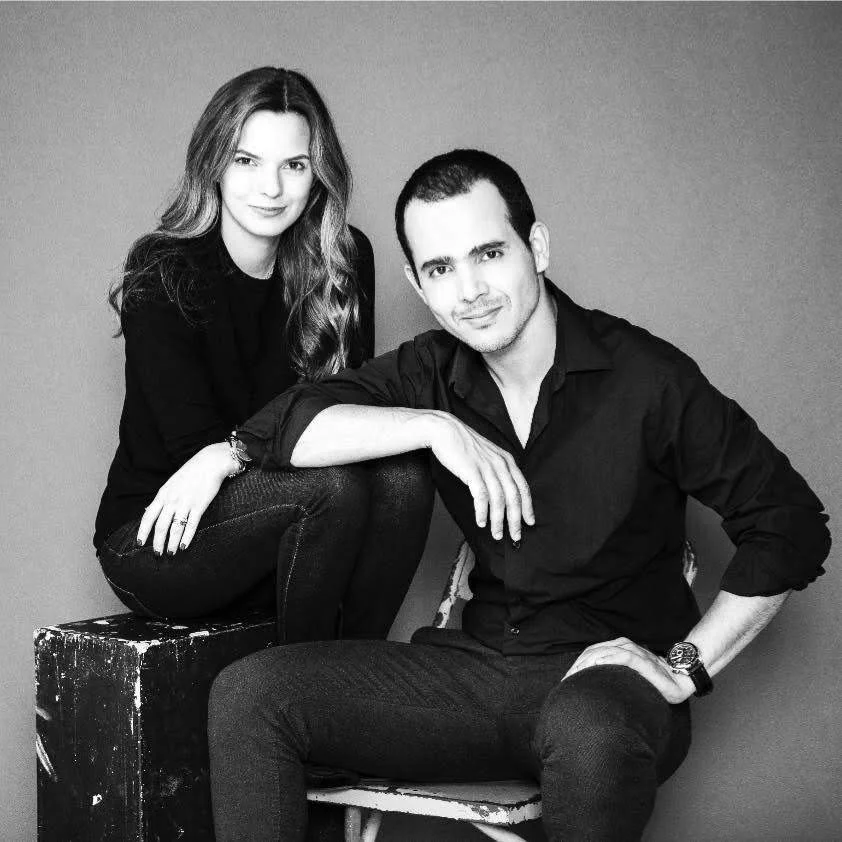
I was teaching photography at a university in Guayaquil when a friend told me about Miriam. She was studying financial engineering but kept signing up for photography classes. A mutual friend insisted we should work together. We resisted for a while. Then we sat down.
She was 20. She told me she wanted to work in this. I told her I had nothing — no studio, no clients, no money to pay anyone. She didn't care. We decided to build something together and split whatever came in.
That conversation was 17 years ago.
Our first studio was an old house in Guayaquil. We couldn't afford real backgrounds so we bought cardboard — lots of it — and glued sheets together until we had something that looked halfway decent on camera. We had one small camera. That was everything we owned.
Our first real client paid us enough to make $700 each per month. Rent, food, transport — it didn't cover it. We needed a computer to edit the photos and we couldn't buy one. Miriam's dad lent us the money. I think about that a lot. Without that computer we couldn't have delivered professional work.
Then we got a second client who needed studio photography. The studio rental was $200 a day. The client paid us $150 per photo. Every shoot was a net loss. We did it anyway because we needed the portfolio and we needed people to see the work.
At some point Miriam said we needed our own space. She was right — we were bleeding money on rentals and we couldn't control the quality of our environment.
We found an empty restaurant. Completely abandoned. We tore it down and rebuilt it into a photography studio. No savings. No outside investors. We used credit cards and company overdrafts. If my accountant from today could see what we did back then, he'd lose his mind.
But it worked. Once we had our space, the work changed. We went from scraping by to two campaigns a day. Almost every day of the month was booked. And then the agencies started calling — not us calling them. BBDO. DDB. McCann. Ogilvy. Saatchi & Saatchi. Leo Burnett. The biggest names in advertising, looking for us because the work had gotten strong enough to travel by reputation.
General Motors. Coca-Cola. Pepsi. American Express. Volkswagen. Samsung. De Prati. Every client was either Fortune 500 or the biggest in their category across Latin America. We were producing advertising campaigns across Colombia, Ecuador, Peru, Mexico, Brazil, Argentina — sometimes multiple countries in the same month.
The Pepsi campaign we shot with BBDO won a Gold Effie. The "Zaparo Collection" we produced for the Ministry of Heritage of Ecuador was shortlisted at Cannes Lions 2014 in PR Lions. Our environmental campaign work earned a Gold Lion at Cannes in the Sustainable Development Goals category. Lürzer's Archive selected me for their "200 Best Ad Photographers Worldwide" book — they review thousands of campaigns globally and pick 200. Hasselblad named me a semifinalist in their Masters competition twice — 2010 and 2011, in the Fashion category.
None of that was planned. We were just working. The recognition caught up later.
During those years, my friend Guillermo Valverde at BBDO and I started running photography workshops. BBDO sponsored them — we held over 10 workshops, sometimes at BBDO's offices, sometimes at other locations around the city. More than 200 young people went through those sessions. Many of them are working professionals in the industry now.
I didn't do it for a line on a resume. I did it because someone taught me, and it felt right to pass that on. But looking back, training that many people while running a full production company was its own kind of crazy.
The 2016 earthquake hit Ecuador. Our studio — the one we built from that abandoned restaurant with credit cards — collapsed. The physical building came down.
We rebuilt it.
Then the country's economy crashed. Clients disappeared. Revenue stopped.
We rebuilt again.
Through all of it, Miriam never stopped. She kept the company running, managed the clients, held everything together. I hear people use the word "resilience" and usually it means someone had a hard quarter. For us it meant rebuilding a collapsed studio while the economy was disappearing around us.
We never talked about whether to quit. It wasn't a conversation. We just started again.
Miriam moved to the US with her husband. We founded ASA Creative in Miami together — she built the business structure while I focused on building the creative and production side. It wasn't running from something. It was running toward something bigger.
We saw an opportunity to take everything we'd learned producing campaigns across 10 countries — every kind of client, every kind of pressure — and bring that to the American market. The company operates from Miami with production presence in Ecuador and Peru. Our international clients are still with us. But the focus is growing here.
This country gave us a real chance. We want to give back by doing the best work we can — bringing the international clients we've built relationships with into the US market, creating jobs, producing work that raises the bar for what a small production company can do.
ASA Creative is 12 people now. We produce music videos for Warner Music, Sony Music, Universal Music, and 5020 Records. We shoot advertising photography for global brands. We work with the food industry. We moved into the music industry and now we direct videos for artists like Juanes, Jay Cortez, 5020, universal.
And we built something that nobody expected from a production company: a data science department that analyzes thousands of ads to understand what actually drives content performance. We built it because we kept seeing the same gap — production teams making creative decisions based on gut feeling while the data was sitting right there. Nobody in our corner of the industry was doing it. So we did.
Miriam handles strategy, clients, and the business. I handle creative direction and production. After 17 years we don't need to explain things to each other — she knows what I'm thinking and I know when she's about to change the plan.
People ask me for advice on starting a business. I only have one thing worth saying: find the right person.
Not the right camera. Not the right investor. Not the right market. The right person. Someone who says "let's build a studio" when you can barely afford food. Someone who rebuilds after an earthquake without stopping to ask if it's worth it. Someone who has been next to you for 17 years through every crisis and every win without ever wavering.
Miriam Rabascall is that person for me. She's not my business partner. She's my sister. Seventeen years. Over 600 campaigns. Ten countries. And if everything fell apart tomorrow I'd call her first.
She'd probably already be calling me. She's always been faster.
Related: About ASA Creative · Case Studies · Juanes "Muérdeme" in Santa Marta · How to Manage a Creative Team · Work with us